Here at Better Bodies on Campbell we ask you if you remember what your fitness goals for 2012 are? I know it seems like Jan was a long time ago and that is because it was. So long ago that we are probably starting to think about what our plan is for 2013. So I am encouraging you to finish 2012 strong.
I figure one of two things have happened to our 2012 goals. The first, we are right on track and finishing strong and we are ready to get through the Holidays with victory and set up for 2013. Or second, we lost site of our goals and we off track.
If the first is you then congratulations and keep going. Tell us how you kept on track with your fitness goals here or on Facebook. If the second is you, then lets take a minute to reflect on what we wanted to accomplish in 2012 and see if your goal is salvageable. If not, lets set a mini goal to finish the year strong and set yourself up for success in 2013. We would like to hear your story either here or on Facebook of how your going to finish strong this year with your health and fitness.
If you need help with your program either by design or if you would like us to be more involved, call (520)318-3488, DM us, or email us at justin@betterbodiestucson.com. We can help you finish strong.
All approved stories will be featured on Facebook and our website as well. Video and pictures are welcome. Lets stay healthy Tucson.
Sincerely,
Justin List
Owner: Better Bodies on Campbell

Reaching out to as many people as I can about fitness and exercise to give them a better life. I believe I can do this by giving clarification to all the "media fitness". I want to create a healthier more fullfilling life for you and your family with fitness and exercise workout programs.
betterbodiestucson.com
- Justin List
- Personal Training Studio dedicated to helping people to a healthier, happier, more fulfilling life.
Showing posts with label Programs. Show all posts
Showing posts with label Programs. Show all posts
Thursday, October 25, 2012


Friday, October 19, 2012
Fitness For The Weekend

Monday, October 15, 2012
Footwear, What Do You Prefer?
Today I would like to get your feedback on footwear. There are a lot of differing opinions on footwear so Better Bodies on Campbell would like to hear your thoughts. What do you were and why?
I would also like to give you my thoughts from a personal trainer's perspective. I have heard and read different articles and opinions from some really great sources. So for myself, I have done what I always do and I ask my "fail proof" question, for whom is the article written, or for what goal?
The conclusion I have come to is that there is no one answer and there is not one shoe that does it all. I take into consideration two things when I am choosing footwear for my current activity. The first consideration that I always keep in mind that the feet are the proprioceptors for the hips and the second, is the activity that I am doing which adds support and striking point.
For the proprioception, the more there is between the foot and the ground, the less your hips can stabalize. This is important for slower movements like hiking, walking, and working out. I use a flat soled shoe for everything outside of running. I like vans for this purpose and I have seen the finger shoes, hiking boots, wrestling shoes, and barefoot. I know some people that have went as far as doing squats barefoot in the sand and Arnold preferred working out barefoot. Done right, you can really build your arches well and it help with daily activities as well. I prefer Vans myself as the cost is reasonable and the construction and quality is great. I even hike in high top vans.
For the second determining factor of activity, you may not want a flat soled shoe for long distance running or sprinting. Also, some sports require a different shoe like soccer, football, special pedals for biking, etc. So if your sport determines your footwear, use the appropriate footwear. If it is up to you in something like running then go with what works best for you. Usually you will be picking a good running shoe with a sole that creates a slight tilt forward. This helps with a heal strike and helps to position your body. There are plenty of runners that will use the toe shoes or finger shoes. From the advice that I have heard from seminars and professional athlete coaches and doctors is not always the same. Some say to go with a running shoe and others stay with the minimal amount of sole on a shoe. For the minimal sole shoe, What seems to be consistent is that you should build up to running with the toe shoes and don't go out and change it all at once. If your not used to a toe shoe then maybe walk with them for a couple days, then run a short distance to make sure your foot is adapting to it. You will need to build your arch and it takes some time. The basics to building an arch are to walk on three points. Your heel, the knuckle of your pinkie toe and the knuckle of your big toe. In the beginning you will feel like your walking on the outside of your foot and your muscles along the outside of your calf might get sore.
So like anything, take it all into consideration and go with what works for you. And don't be apposed to changing down the road as your arch builds and you pay more attention to how your foot touches the ground. Feel free to email me (justin@betterbodiestucson.com) or DM me on Facebook for more info. And please feel free to leave your comments and opinions as there are great people with differing opinions here so your feedback is much appreciated.
Exercise well, Exercise often.
Sincerely,
Justin List
Owner: Better Bodies on Campbell
Email: justin@betterbodiestucson.com
Facebook: facebook.com/betterbodiesoncampbell
I would also like to give you my thoughts from a personal trainer's perspective. I have heard and read different articles and opinions from some really great sources. So for myself, I have done what I always do and I ask my "fail proof" question, for whom is the article written, or for what goal?
The conclusion I have come to is that there is no one answer and there is not one shoe that does it all. I take into consideration two things when I am choosing footwear for my current activity. The first consideration that I always keep in mind that the feet are the proprioceptors for the hips and the second, is the activity that I am doing which adds support and striking point.
For the proprioception, the more there is between the foot and the ground, the less your hips can stabalize. This is important for slower movements like hiking, walking, and working out. I use a flat soled shoe for everything outside of running. I like vans for this purpose and I have seen the finger shoes, hiking boots, wrestling shoes, and barefoot. I know some people that have went as far as doing squats barefoot in the sand and Arnold preferred working out barefoot. Done right, you can really build your arches well and it help with daily activities as well. I prefer Vans myself as the cost is reasonable and the construction and quality is great. I even hike in high top vans.
For the second determining factor of activity, you may not want a flat soled shoe for long distance running or sprinting. Also, some sports require a different shoe like soccer, football, special pedals for biking, etc. So if your sport determines your footwear, use the appropriate footwear. If it is up to you in something like running then go with what works best for you. Usually you will be picking a good running shoe with a sole that creates a slight tilt forward. This helps with a heal strike and helps to position your body. There are plenty of runners that will use the toe shoes or finger shoes. From the advice that I have heard from seminars and professional athlete coaches and doctors is not always the same. Some say to go with a running shoe and others stay with the minimal amount of sole on a shoe. For the minimal sole shoe, What seems to be consistent is that you should build up to running with the toe shoes and don't go out and change it all at once. If your not used to a toe shoe then maybe walk with them for a couple days, then run a short distance to make sure your foot is adapting to it. You will need to build your arch and it takes some time. The basics to building an arch are to walk on three points. Your heel, the knuckle of your pinkie toe and the knuckle of your big toe. In the beginning you will feel like your walking on the outside of your foot and your muscles along the outside of your calf might get sore.
So like anything, take it all into consideration and go with what works for you. And don't be apposed to changing down the road as your arch builds and you pay more attention to how your foot touches the ground. Feel free to email me (justin@betterbodiestucson.com) or DM me on Facebook for more info. And please feel free to leave your comments and opinions as there are great people with differing opinions here so your feedback is much appreciated.
Exercise well, Exercise often.
Sincerely,
Justin List
Owner: Better Bodies on Campbell
Email: justin@betterbodiestucson.com
Facebook: facebook.com/betterbodiesoncampbell
Wednesday, October 10, 2012
Good Morning Tucson 10-10-12

Thursday, September 20, 2012
Tip of The Day (Planning Health With Your Vacation)
It has been said that most people plan their vacation better than they plan their life. It is also true that when people plan their vacation, they actually plan on how to be unhealthy rather than healthy. Not all but most. You have heard it, when someone is going on a vacation and they are talking about this bakery or that restaurant.
What I propose is to plan on an activity each day and plan on good meals. If you discover a new restaurant or food by chance it is not the end of the world. And it will happen. What I am suggesting is to plan for health and don't plan for unhealth. Discover a new food instead of planning to eat what you already know.
So here are a few tips. First, plan some type of fitness activity every morning. It doesn't have to be super intensive or at a gym. You can find a local gym if you like and each time you travel you can compare and see what gyms you think are the best. Rate them if you like and start a journal. Or you can meditate, stretch, do a workout video, Pilates or yoga. Just as long as you put fitness in the day, you will get more out of your vacation and less vacation to work off when you get home. Second, plan a healthy breakfast and start the day off right. Find a grocery store and get some fruit. Don't just let meals happen, plan them and think ahead. You will feel better and be glad you did. We usually think of going to the grocery store to get a whole shopping cart full of grocery's. You can get just one or two pieces of fruit. Or find a local market and get something native to the area. Find the healthy food a vacation spot is known for. And last, portion control. Savor it don't gorge. Some of the best memories are left with just enough and not overdoing it. And last, if you are traveling with kids, make sure you start the day with a healthy breakfast and good hydration. Your kids will behave so much better if they aren't dehydrated and don't have sugar crashes later in the day because they started with doughnuts. Make it a game. See if you would travel or work harder to get something bad for you, or to get that great island fruit that is a little further away.
Follow these tips and you will have a better vacation and a much happier return. Imagine if you came back from vacation and you didn't gain weight.
Let us know how you plan for health when you travel.
Have a great day,
Justin List
Owner: Better Bodies on Campbell (Tucson,Az)
520-318-3488
What I propose is to plan on an activity each day and plan on good meals. If you discover a new restaurant or food by chance it is not the end of the world. And it will happen. What I am suggesting is to plan for health and don't plan for unhealth. Discover a new food instead of planning to eat what you already know.
So here are a few tips. First, plan some type of fitness activity every morning. It doesn't have to be super intensive or at a gym. You can find a local gym if you like and each time you travel you can compare and see what gyms you think are the best. Rate them if you like and start a journal. Or you can meditate, stretch, do a workout video, Pilates or yoga. Just as long as you put fitness in the day, you will get more out of your vacation and less vacation to work off when you get home. Second, plan a healthy breakfast and start the day off right. Find a grocery store and get some fruit. Don't just let meals happen, plan them and think ahead. You will feel better and be glad you did. We usually think of going to the grocery store to get a whole shopping cart full of grocery's. You can get just one or two pieces of fruit. Or find a local market and get something native to the area. Find the healthy food a vacation spot is known for. And last, portion control. Savor it don't gorge. Some of the best memories are left with just enough and not overdoing it. And last, if you are traveling with kids, make sure you start the day with a healthy breakfast and good hydration. Your kids will behave so much better if they aren't dehydrated and don't have sugar crashes later in the day because they started with doughnuts. Make it a game. See if you would travel or work harder to get something bad for you, or to get that great island fruit that is a little further away.
Follow these tips and you will have a better vacation and a much happier return. Imagine if you came back from vacation and you didn't gain weight.
Let us know how you plan for health when you travel.
Have a great day,
Justin List
Owner: Better Bodies on Campbell (Tucson,Az)
520-318-3488
Friday, September 14, 2012
Try Adding Meditation to Your Fitness Program
Here is an article about meditation from Dr. Oz. Add meditation to your overall fitness program and you will see your results improve. Read this article and tell me what you think. The article is posted on Facebook as well at www.facebook.com/betterbodiesoncampbell.com.
http://www.doctoroz.com/blog/uhc-smart-patient/meditation-should-you-try-some-om-home
 You don’t have to be a Zen master to benefit from a quieter, more peaceful mind.
Meditation, an ancient mind-body practice, may do wonders to relieve modern-day stress – and enhance overall well-being. In general, meditation involves learning to focus your attention. And, yes, it’s been done for thousands of years. But, research on the benefits of this practice is still ongoing.
It has been shown to produce positive changes in the body. For example, meditation may:
Provided by Arleen Fitzgerald L.I.C.S.W. Arleen Fitzgerald has a master's degree and has been an independently licensed clinical social worker and psychotherapist for the past 20 years in public and private practice settings. She works in the field of integrating medical and behavioral health care.
http://www.doctoroz.com/blog/uhc-smart-patient/meditation-should-you-try-some-om-home
Meditation: Should You Try Some Om at Home?
You don’t have to be a Zen master to benefit from a quieter, more peaceful mind.Meditation, an ancient mind-body practice, may do wonders to relieve modern-day stress – and enhance overall well-being. In general, meditation involves learning to focus your attention. And, yes, it’s been done for thousands of years. But, research on the benefits of this practice is still ongoing.
It has been shown to produce positive changes in the body. For example, meditation may:
- Produce a calming, relaxing response
- Stimulate “feel-good” areas of the brain
- Lower blood pressure
- Improve blood flow and digestion
- Increase the ability to concentrate during everyday tasks
- Anxiety Depression
- Chronic pain
- Insomnia
- Find a peaceful place. A quiet, distraction-free zone is best.
- Get comfortable. Find a relaxing position. You might avoid lying down – if you think you’ll fall asleep.
- Focus your attention. Some people choose a word, phrase or sound – a mantra, such as om – to repeat aloud or silently. Others just concentrate on their breathing – or visualize a pleasing setting.
- Don’t worry about perfection. It’s normal to be distracted, especially at first. Masters of meditation say the art is in letting your thoughts just come and go – without mulling them over.
- Give it time. You might start small – with five-minute blocks of time, for example. As you become more practiced, work up to longer sessions.
Provided by Arleen Fitzgerald L.I.C.S.W. Arleen Fitzgerald has a master's degree and has been an independently licensed clinical social worker and psychotherapist for the past 20 years in public and private practice settings. She works in the field of integrating medical and behavioral health care.
Thursday, September 13, 2012
Exceptional Nutrition for Expecting Moms
 |
Carl Keen, Ph.D. is a professor and Chair, Department of Nutrition, University of California at Davis; former National Institute of Dental Research postdoctoral fellow, Proctor and Gamble postdoctoral fellow; member, California¹s Scientific Advisory Board for the Office of Environmental Health Hazard Assessment; reviewer, USDA Human Nutrient Requirements Study Section; member, EPA Environmental Health Grant Review Panels; member, numerous NIH panels; past president, California Nutrition Council. |
Nutrition can have a huge impact on the growth and development of children. Great nutrition for children starts in the womb. Nutrients must travel from the mother to the developing baby, and the supply (or lack) of nutrients can have a life-long impact on the health and well-being of children.
For the past 25 years, my colleagues and I at the University of California, Davis have studied the relationship between nutrition and development. Exciting new discoveries linking good nutrition to improved fetal growth and development helps result in better pregnancies and may boost child health and potentially even their intelligence.
A recent study compared the mental processing of four-year-olds whose mothers had taken either a corn oil (placebo) supplement or a mixed omega-3 fatty acid supplement (about 2,000 mg/day of a mixture of DHA and EPA) during the second half of pregnancy and the first three months of breast-feeding. Children of mothers who took the omega-3 supplement scored significantly higher on the intelligence test than those who took the corn oil (Pediatrics 111:e39-44, 2001). These exciting results must be repeated in order to better verify the findings, but the message is clear – good nutrition during pregnancy and breastfeeding can make a huge difference on the health and functioning of children.
Of course, nothing replaces a well-balanced diet rich in whole grains, fruits, vegetables, lean protein and plenty of fluid. But let’s face it – most of us don’t eat that well, so high quality, scientifically based dietary supplements may help “fill in the gaps.”
In our laboratory, we study the role of zinc, an essential trace element, and its role in normal and abnormal embryo and fetal development. Research has shown that low dietary zinc intake (a “gap” in the diet) can cause serious birth defects, which can be prevented with dietary zinc supplementation (Journal of Nutrition 133:1597-1605, 2003). But it’s not just zinc that you need. A full complement of nutrients, including zinc, iron, B-vitamins and antioxidants are essential during pregnancy. Well-balanced nutrition supplements designed from the latest research are an important part of a comprehensive and healthy lifestyle during pregnancy.
 |
Saturday, September 8, 2012
Valgus Knee Wrap-Up
The part 3 of the valgus knee is a video and very technical. So I have received feedback that my posts need to be more to the point. So in short, valgus knee collapse is a key indicator of risk for injury to the ACL or the knee in general. It can be corrected with specific movement patterns and exercise and it is more prevalent in females than males due to the hip being wider in the female gender creating an inward direction of the legs and knee. So in recent times, more females are getting to elite status in sports and there are a lot of knee issues in the female athlete. You can spot this by looking at the knees as someone lands or jumps.
If this is an issue for you or anyone you know at any age that is in sports, either recreational or competitive, we can set up a program to start correcting this issue and keep you off the oporating table and in the game.
Contact me today at 520-318-3488 or by email at justin@betterbodiestucson.com or DM me on Facebook and you can also visit our website at www.betterbodiesoncampbell.com
Have a great day.
Sincerely,
Justin List
Owner: Better Bodies on Campbell
520-318-3488
If this is an issue for you or anyone you know at any age that is in sports, either recreational or competitive, we can set up a program to start correcting this issue and keep you off the oporating table and in the game.
Contact me today at 520-318-3488 or by email at justin@betterbodiestucson.com or DM me on Facebook and you can also visit our website at www.betterbodiesoncampbell.com
Have a great day.
Sincerely,
Justin List
Owner: Better Bodies on Campbell
520-318-3488
Friday, September 7, 2012
Identifying the What and Why of Valgus Collapse (Part 2: Identifying the Why of Valgus Collapse)
Published on 1/6/2012 by Dr. Robert Butler in FMS Research


Multiple studies examining valgus collapse have suggested that it is modifiable. Multiple studies have suggested that neuromuscular training programs can reduce the amount of valgus collapse. Reductions in valgus collapse during jump landing have also been observed when using imagery techniques. The bottom line here is that valgus collapse is modifiable. Now that we know it is modifiable it is important to determine what are the factors associated with this movement dysfunction in order to develop efficient intervention strategies.
The first item that is often thought of to correct valgus collapse is maximum muscle strength. Research on the relationship between strength and valgus collapse has suggested that no relationship exists between these parameters. While maximum strength alone is not related to valgus collapse, it does appear that a component of strength, muscle endurance, is related to hip internal rotation during running (a component of valgus collapse). Souza et al., (2009) reported that the only factor that predicted hip internal rotation during running, when considering multiple lower extremity strength and anthropometric measures, was hip extension (Gluteus maximus) endurance (r2 = 0.20). The results of this study help in understanding what factors are related to 1 of the 3 components of “valgus collapse”. So the question remains as to what else may be related to this movement construct.
The next item that is often discussed when attempting to explain valgus collapse is muscle activation. Little work has been conducted in this area likely due to the delicate nature and difficulty in the collection and interpretation of these data. One study has suggested that an earlier onset of the gluteus medius and maximus were correlated with hip adduction motion while an earlier onset of the gluteus maximus was correlated with hip internal rotation motion during running (Willson et al., 2011). It was interesting to note that the timing of onset exhibited a stronger relationship than peak or average muscle activity of the gluteus medius and maximus during running. However, since correlation does not equal causation it is important to look further into the literature. Follow up studies have revealed that the strongest predictors (Willson et al., CSM 2011; r2 = 0.45) of hip adduction during running is the onset and length of activation of gluteus medius. These findings would suggest that neuromuscular training that causes an early onset of the gluteal muscles would be beneficial in optimizing movement retraining as related to correcting valgus collapse.
So to date, the best hypothesis that we have as to how to normalize “valgus collapse” is by focusing on gluteal muscle endurance and pre-activation. It is important to note that both of these studies occurred in during running as opposed to jump landing which may bring about a different model for retraining due to the bilateral nature of the task. I think one question that remains is regarding at what level of resistance does the dysfunctional pattern appear? Jump landings and running place about 2.5-5 bodyweights on the lower extremity on the body and when our bodies respond with valgus collapse it is not because it is physiologically optimal rather it is due to an inherent need to utilize secondary planes of motion to keep the body upright and to maintain a cranial acceleration of 1 g. If this were a resistance exercise we would simply reduce the amount of weight (i.e. take a plate off or change barbells) to examine under what load the compensatory strategy occurred, however, these are dynamic motions which we cannot offload so easily. This is what we will discuss in our next two postings. How do we breakdown the higher level constructs of running and jump landings to determine at what level dysfunction exists?


Thursday, September 6, 2012
What is Valgus Knee Collapse and How Could it Affect Me?
Identifying the what and why of valgus collapse
(Part 1: Identifying the what of valgus collapse)
It seems as if every lower extremity overuse ailment is associated to some
degree with valgus collapse. ACL tears? Check. Patellofemoral Pain? Check.
Illiotibial band pain? Check. Tibial Stress Fractures? Check. As a result a
number of research studies have begun to examine what exactly valgus
collapse is and what factors are associated with valgus. One of the primary
researchers in this area is John Willson, PT, PhD in the Department of Physical
Therapy at the University of Wisconsin at LaCrosse. Research conducted by Dr.
Willson has led us to a better understanding of this pathological movement.
First, it is important to understand what components of movement make up
the valgus collapse construct. Valgus collapse is typically measured by viewing
the frontal plane motion and thus creating a frontal plane projection angle.
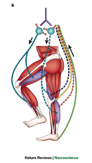
however, just because we see the picture shows frontal plane motion does that suggest the motion is
coming from the frontal plane in the body. Even when you place the knee joint in 40 degrees of flexion
(typical of running at midstance) the available frontal plane motion is minimal. As a result we need to
understand what are the primary motions associated with this pattern.
An initial study in this area by Willson and colleagues correlated the twodimensional
frontal plane projection angle to three-dimensional data of the
lower extremity during a single leg squat in 40 runners half of whom had
patellofemoral pain. The researchers observed that the strongest correlates
of the frontal plane projection angle were the frontal plane motion at the hip
and transverse plane motion at the knee (external rotation) and hip (internal
rotation). Not surprisingly, there was not a significant relationship for the
frontal plane angle at the knee. Additional analysis of the significant
relationships revealed that the primary factors associated with the valgus
collapse posture were contralateral pelvic drop, femoral adduction and
femoral internal rotation. While I imagine this result does not surprise
anyone it provides support and directions for areas with which to intervene
when aiming to alter valgus collapse.
As a result of this study we know have a better idea of what is associated with
valgus collapse. Now the follow up question is what needs to change to
reduce valgus collapse? Is it just a strength issue, is it a muscle activity issue,
is it a proprioceptive issue? Well, it all likelihood it depends on the individual
who needs the training and it is important to systematically screen out all of
these issues. That being said through controlled research studies we can
begin to understand what are the primary factors associated with this
pattern. Examining the factors associated with valgus collapse will be
highlighted in the 2nd part of this series before we begin to take a look at
some motion analysis case studies in this area as well.
You can get more information about movement at www.functionalmovement.com
Here at Better Bodies on Campbell, we have fully implemented the Functional Movement System and our clients couldn't be happier. To have better range of motion, flexibility, balance to equal better workouts and better results. Call us today and schedule a free screen. 520-318-3488 or email us at justin@betterbodiestucson.com
(Part 1: Identifying the what of valgus collapse)
It seems as if every lower extremity overuse ailment is associated to some
degree with valgus collapse. ACL tears? Check. Patellofemoral Pain? Check.
Illiotibial band pain? Check. Tibial Stress Fractures? Check. As a result a
number of research studies have begun to examine what exactly valgus
collapse is and what factors are associated with valgus. One of the primary
researchers in this area is John Willson, PT, PhD in the Department of Physical
Therapy at the University of Wisconsin at LaCrosse. Research conducted by Dr.
Willson has led us to a better understanding of this pathological movement.
First, it is important to understand what components of movement make up
the valgus collapse construct. Valgus collapse is typically measured by viewing
the frontal plane motion and thus creating a frontal plane projection angle.
however, just because we see the picture shows frontal plane motion does that suggest the motion is
coming from the frontal plane in the body. Even when you place the knee joint in 40 degrees of flexion
(typical of running at midstance) the available frontal plane motion is minimal. As a result we need to
understand what are the primary motions associated with this pattern.
An initial study in this area by Willson and colleagues correlated the twodimensional
frontal plane projection angle to three-dimensional data of the
lower extremity during a single leg squat in 40 runners half of whom had
patellofemoral pain. The researchers observed that the strongest correlates
of the frontal plane projection angle were the frontal plane motion at the hip
and transverse plane motion at the knee (external rotation) and hip (internal
rotation). Not surprisingly, there was not a significant relationship for the
frontal plane angle at the knee. Additional analysis of the significant
relationships revealed that the primary factors associated with the valgus
collapse posture were contralateral pelvic drop, femoral adduction and
femoral internal rotation. While I imagine this result does not surprise
anyone it provides support and directions for areas with which to intervene
when aiming to alter valgus collapse.
As a result of this study we know have a better idea of what is associated with
valgus collapse. Now the follow up question is what needs to change to
reduce valgus collapse? Is it just a strength issue, is it a muscle activity issue,
is it a proprioceptive issue? Well, it all likelihood it depends on the individual
who needs the training and it is important to systematically screen out all of
these issues. That being said through controlled research studies we can
begin to understand what are the primary factors associated with this
pattern. Examining the factors associated with valgus collapse will be
highlighted in the 2nd part of this series before we begin to take a look at
some motion analysis case studies in this area as well.
You can get more information about movement at www.functionalmovement.com
Here at Better Bodies on Campbell, we have fully implemented the Functional Movement System and our clients couldn't be happier. To have better range of motion, flexibility, balance to equal better workouts and better results. Call us today and schedule a free screen. 520-318-3488 or email us at justin@betterbodiestucson.com
Thursday, November 3, 2011
Shopping Tip
Here is a shopping tip to stay healthy. I make it a personal challenge to use the carry basket and not the push cart. If I can't fit it in the basket then I don't need it. Fruit, Veggie, Meat source will all fit in the carry basket. Try it. I work from 830 to 830 and I still make it a habit to go to the store daily so I always eat fresh and exactly what I want.
Let one of our fitness professionals at Better Bodies on Campbell help with your health fitness program, whatever your needs are. Contact us today and lets get started on a better body for you. Ask for Justin.
Office: 520-318-3488
Email: justin@betterbodiestucson.com
Facebook: facebook.com/betterbodiesoncampbell
Website: betterbodiesoncampbell.com
Twitter: twitter.com/betterbodiestuc
Let one of our fitness professionals at Better Bodies on Campbell help with your health fitness program, whatever your needs are. Contact us today and lets get started on a better body for you. Ask for Justin.
Office: 520-318-3488
Email: justin@betterbodiestucson.com
Facebook: facebook.com/betterbodiesoncampbell
Website: betterbodiesoncampbell.com
Twitter: twitter.com/betterbodiestuc
Tuesday, November 1, 2011
Halloween After

I hope you all had a great Halloween. I am sure you worked hard to get into the costume you wore. And I am also sure you got started on some candy. This is the beginning, or could be the beginning of the "holiday bulge". Don't let it happen to you.
Set a plan to counter all those calories. Try adding up all the calories and seeing how far you have to run or walk to burn it off. Think of the calories as gas for your car. X amount of gallons gets you so many miles, Y amount of calories gets you so many minutes of cardio or exercise.
The best way to lose weight is to not gain it, so lets start early. If you want a professional to help you with a plan or program, just let us at Better Bodies on Campbell help. We are the best when it comes to health and fitness and setting goals both long and short term. So let us at Better Bodies on Campbell help you lose that weight, either before you gain it or after you gain it.
For this Novemeber, mention this blog and get 20% off personal training packages paid in full for new members only. All current members, don't forget that you get $100 off your next set of sessions by referring a friend or family member.
If you don't live in Tucson, we can make a program for you over the net as well. So give us a call today at 520-318-3488 or email us at justin@betterbodiestucson.com. Also, see our website at www.betterbodiesoncampbell.com.
Have a great holiday season,
Sincerely,
Justin List and the Better Bodies staff.
Friday, October 28, 2011
Can Your Body Handle Your Training?

My question to you today is, can your body handle your training? Have you built the foundation for the exercises and movements that your program consists of? I will give you some good questions to ask yourself or your trainer to see if the exercises you are doing are right for your goals, and if your body can handle them.
One quick way is to ask yourself or your trainer, "why am I doing these exercises"? If you don't know why your doing the exercises that you are doing, I suggest you find out. Especially if you are working hard, putting in the time and effort and seeing no results. Most people do the exercises that they know, rather than the exercises that they should be. If you find yourself here, go seek a professional. A personal training studios will be able to put together a tune up program of maybe 10 to 24 sessions to get you on track for those who are self motivated. It may take longer or more sessions depending upon your fitness level and level of expertise. It is worth the money. Think about all the nonsense you spend money on. We tend to spend more on being unhealthy than we are willing to spend on being healthy. For example; alcohol and appetizers, dessert, unhealthy vacations, snacks, latte's, cigarettes, etc. Think about what your health is worth or what it is worth to have the body you want.
The next question is a tough one. "Can my body handle the exercises I am doing"? Not too many people even think to ask this question. This leads to several other questions. First is, do you get uncomfortably sore from your workouts? I don't meant in the arms or legs, I am talking about an uncomfortable soreness usually not in the intended muscle group. For example, if you do squats and lunges and the next day your hips, low back, and trunk are sore, you probably don't have the proper mechanics to perform the exercise. Or, if certain exercises are uncomfortable to perform? i.e. sit-ups, push ups, squats, lunges, rows. You may not have the stability or mobility to perform these exercises correctly. So what we usually do is struggle through them, hate them, and never get a benefit from them. It is like going to a job you hate and not getting paid. If you fall into this category, I would get to a personal trainer right away that is FMS certified. They will be able to do a full body screen, a lot like an assessment, and see what needs to be done to move correctly again and start getting results. Fit people move well, so lets move well.
Last, if you do not move well, you run the risk of injury. It is forcing the body to move in a way that it has built a resistance to. We can develop movement issues due to mobility, stability, and asymmetries. These can come from sports that are one side dominant like golf, bowling, softball, etc. They can also come from heavy work loads, sitting at a desk in a bad position, injuries, bad habits, car accident, surgeries, etc. Whatever the reason is, you will get greater results and feel better doing it, if you move well.
At my studio, we promote moving well and moving often as taught by the FMS with Gray Cook and Lee Burton. If you have any questions, feel free to call (520-318-3488), email (justin@betterbodiestucson.com), find us on Facebook (facebook.com/betterbodiesoncampbell) or follow us on Twitter (twitter.com/betterbodiestuc) We are based in Tucson, AZ. and we will do a screen at no cost to you. We have 5 trainers that are trained to do FMS screens.
Have a great day and you can be as healthy as you want to be.
Justin List
Owner: Better Bodies on Campbell
Email: justin@betterbodiesoncampbell.com
Facebook: facebook.com/betterbodiesoncampbell
Twitter: twitter.com/betterbodiestuc
Friday, July 22, 2011
Shake Up Your Routine
Is your routine boring or have you come to a plateau? Try changing your weight and reps.
I find that most people use a weight that is too light and they are doing 15 reps. Try raising the weight by 20% and going to 12 reps and increase your sets from 3 to 4 or 5 per exercise.
This should shake up your routine.
For more information on lifting tips, we are easily accessed online or in person.
Email: justin@betterbodiestucson.com
Facebook: www.facebook.com/betterbodiesoncampbell
Website: www.betterbodiesoncampbell.com
Phone: 520-318-3488
I find that most people use a weight that is too light and they are doing 15 reps. Try raising the weight by 20% and going to 12 reps and increase your sets from 3 to 4 or 5 per exercise.
This should shake up your routine.
For more information on lifting tips, we are easily accessed online or in person.
Email: justin@betterbodiestucson.com
Facebook: www.facebook.com/betterbodiesoncampbell
Website: www.betterbodiesoncampbell.com
Phone: 520-318-3488
Thursday, June 16, 2011
Burn 150 to 200 Calories to Start Your Day
Burn 150-200 calories easily in 20 minutes to jump start your day. When you wake up in the morning, get your breakfast started, coffee if you drink it and then get into a quick 20 minute routine that will burn an extra 150-200 calories. That is close to half a pound in a week and it is easy.
Start with 5 minutes of stretching. Toe touches, hurdler stretches, butterfly, and calf stretches. Then go into 15 minutes of jump rope. If you don't have a jump rope, just do the motion. You don't need a rope.
You will elevate your heart rate, and get you ready for the day. You will be awake and have a fantastic day with increased problem solving and a great feeling that you already did some exercise.
Add a nite routine too and double your results. With one workout a day, you will burn the equivalent to almost 20 pounds in a year. Do a morning and nite routine and burn equal to almost 42 pounds of fat in a year.
The key is to not eat these calories back on. Couple this with smart eating choices and portion control, and you will be surprised at how easy it is over time.
For more questions call us at Better Bodies on Campbell at 520-318-3488. Email us at justin@betterbodiestucson.com. And new members can get a great summer start up package of 6 sessions for $99. Good through July 4th, 2011
Get started today and send your testimonial of your results to post on our new website. www.betterbodiesoncampell.com It is still in the works so we are looking for some good stories out there. They don't have to be weight loss, it can be anything to do with getting more out of life.
Get fit Tucson,
Sincerely,
Justin List
Owner: Better Bodies on Campbell
318-3488
justin@betterbodiestucson.com
Start with 5 minutes of stretching. Toe touches, hurdler stretches, butterfly, and calf stretches. Then go into 15 minutes of jump rope. If you don't have a jump rope, just do the motion. You don't need a rope.
You will elevate your heart rate, and get you ready for the day. You will be awake and have a fantastic day with increased problem solving and a great feeling that you already did some exercise.
Add a nite routine too and double your results. With one workout a day, you will burn the equivalent to almost 20 pounds in a year. Do a morning and nite routine and burn equal to almost 42 pounds of fat in a year.
The key is to not eat these calories back on. Couple this with smart eating choices and portion control, and you will be surprised at how easy it is over time.
For more questions call us at Better Bodies on Campbell at 520-318-3488. Email us at justin@betterbodiestucson.com. And new members can get a great summer start up package of 6 sessions for $99. Good through July 4th, 2011
Get started today and send your testimonial of your results to post on our new website. www.betterbodiesoncampell.com It is still in the works so we are looking for some good stories out there. They don't have to be weight loss, it can be anything to do with getting more out of life.
Get fit Tucson,
Sincerely,
Justin List
Owner: Better Bodies on Campbell
318-3488
justin@betterbodiestucson.com
Wednesday, November 19, 2008
(1) Your Program
Here are some questions you should know about your program.
QUESTIONS:
1) What are the four components to a succesful program?
2) What should your heart rate be while doing cardio and for how long should you
be doing cardio?
3) How much protein should you be getting in a day?
4) What is a carb and why should we eat them?
5) What is a protein and why should we eat them?
6) How much sleep should I get and what are 3 benifits to getting enough sleep?
If you don't know the answers ask your trainer or email me. These are important questions to know.
ANSWERES:
1) Weights or resistance training, Food, cardio, and sleep.
2) This is a calculation maximum heart rate and then is according to goal. A
little different for everyone. With wearing a heart rate monitor I was sure you
knew this one.
3) Again a little different for everyone. I like to use about 1 to 1 1/2 grams per
lb of lean body mass. We need to know your lean body mass to figure this one.
4) Carbs are different forms of sugars. They can be complex or simple. We can get
these from grains, pasta, startches, rice, oats, wheat, etc. We try to stay away
from these. Candy, cake, soda, any refined sugar or any sweets are carbs that we
should not consume. Fruits and vegetables are also carbs. These are the good
carbs. We want these. Carbohydrates give us energy and are the catolyst for all
bodily functions. Protein is the building material and carbs are the workers.
5) Protein is for the repair of our body after a workout. A post workout meal is
important within an hour for the repair of our muscles. Protein is the building
blocks for muscles, conective tissues, organs, brain function, and enzymes for
food metabolism.
6) We should sleep in between 7 hours and 15 minutes and 9 hours and 15 minutes.
This ensures R.E.M.(rapid eye movement). One,our brain gets rest here,
Second,our body releases growth hormone into the body here ( gives us full
benefit from our workout. The workout stimulates production of growth hormone
and we then release it in R.E.M.) Third it helps our immune system and who can
afford to or wants to be sick. There are other reasons that proper sleep is
important, stress is another. Mental clarity, coordination,etc.
I feel that these are things that all clients should know and we need to talk about more often. If you have any other question don't hesitate to ask.
QUESTIONS:
1) What are the four components to a succesful program?
2) What should your heart rate be while doing cardio and for how long should you
be doing cardio?
3) How much protein should you be getting in a day?
4) What is a carb and why should we eat them?
5) What is a protein and why should we eat them?
6) How much sleep should I get and what are 3 benifits to getting enough sleep?
If you don't know the answers ask your trainer or email me. These are important questions to know.
ANSWERES:
1) Weights or resistance training, Food, cardio, and sleep.
2) This is a calculation maximum heart rate and then is according to goal. A
little different for everyone. With wearing a heart rate monitor I was sure you
knew this one.
3) Again a little different for everyone. I like to use about 1 to 1 1/2 grams per
lb of lean body mass. We need to know your lean body mass to figure this one.
4) Carbs are different forms of sugars. They can be complex or simple. We can get
these from grains, pasta, startches, rice, oats, wheat, etc. We try to stay away
from these. Candy, cake, soda, any refined sugar or any sweets are carbs that we
should not consume. Fruits and vegetables are also carbs. These are the good
carbs. We want these. Carbohydrates give us energy and are the catolyst for all
bodily functions. Protein is the building material and carbs are the workers.
5) Protein is for the repair of our body after a workout. A post workout meal is
important within an hour for the repair of our muscles. Protein is the building
blocks for muscles, conective tissues, organs, brain function, and enzymes for
food metabolism.
6) We should sleep in between 7 hours and 15 minutes and 9 hours and 15 minutes.
This ensures R.E.M.(rapid eye movement). One,our brain gets rest here,
Second,our body releases growth hormone into the body here ( gives us full
benefit from our workout. The workout stimulates production of growth hormone
and we then release it in R.E.M.) Third it helps our immune system and who can
afford to or wants to be sick. There are other reasons that proper sleep is
important, stress is another. Mental clarity, coordination,etc.
I feel that these are things that all clients should know and we need to talk about more often. If you have any other question don't hesitate to ask.
Subscribe to:
Posts (Atom)