betterbodiestucson.com

My photo
Personal Training Studio dedicated to helping people to a healthier, happier, more fulfilling life.
Showing posts with label Medical. Show all posts

Wednesday, September 12, 2012

OmegaPlex-The Super Nutrient


Sidney Stohs, Ph.D. is Senior Vice President of Research and Development atADVOCARE. He is also a former Dean, School of Pharmacy, Creighton University; professor of pharmacology and toxicology; holder of the Gilbert F. Taffe Jr. Endowed Chair in Research; fellow, American College of Nutrition; fellow, Academy of Toxicological Sciences; author, more than 300 research and educational publications; doctorate in biochemistry and microbiology, University of Wisconsin.
OmegaPlex - the Super Nutrient
Recent research has clearly demonstrated that the consumption of appropriate levels of omega-3 fatty acids improves numerous health outcomes. The omega-3 fatty acids are important for numerous biochemical processes within our body. Everyone needs omega-3 fatty acids. The estimated daily requirement for an adult is 3 to 5 grams per day while the average diet may provide only 1 to 2 grams. Thus, dietary sources are insufficient to provide optimal health needs of omega-3 fatty acids. OmegaPlex is a proprietary blend of the omega-3 fatty acids, docosahexaenoic acid (DHA) and eicosapentaenoic acid (EPA). These omega-3 fatty acids are highly purified, therefore eliminating concerns about contaminants such as heavy metals and pesticides. The source of the omega-3 fatty acids in OmegaPlex is fish oils from such species as mackerel, herring, sardines and anchovies.


Numerous research studies have demonstrated the cardiovascular benefits of consuming omega-3 fatty acids. Adequate intake of omega-3 fatty acids reduces the risk of heart disease and sudden cardiac death by supporting normal heart rhythm, normalizing blood pressure by increasing elasticity of blood vessels, decreasing triglyceride levels, and decreasing inflammation associated with the heart as evidenced by decreases in C-reactive protein (an inflammatory biomarker), as well as decreases in interleukin-6, which is a pro-inflammatory chemical in our body. In addition, omega-3 fatty acids have been shown to decrease the risk of stroke associated with blood clots by controlling and regulating blood coagulation. Omega-3 fatty acids are important components of the membranes of nerve cells as well as the covering (sheath) of nerve and brain tissues. As a consequence, omega-3 fatty acids are critical for brain development during the last trimester of pregnancy as well as after birth. Not only does appropriate omega-3 fatty acid intake decrease the likelihood of a premature delivery, but studies have shown that adequate intake can improve infant visual acuity as well as cognitive development in newborns, improve sleep patterns and even increase IQ scores in young children. Omega-3 fatty acids can also improve motor skills, enhance mood, and slow the deleterious effects associated with Alzheimer’s and other neurological conditions.

Omega-3 fatty acids exhibit an anti-inflammatory effect because they suppress the formation of pro-inflammatory substances that are derived from omega-6 fatty acids as arachidonic acid. Arachidonic acid and other omega-6 fatty acids are derived from vegetable oils such as soy, corn or safflower oils. The anti-inflammatory effects of appropriate omega-3 fatty acid intake can result in modest improvement in joint tenderness and morning stiffness as well as improved lung function. Furthermore, omega-3 fatty acids may help normalize inflammatory bowel conditions such as Crohn’s disease, irritable bowel syndrome and ulcerative colitis.
Omega-3 fatty acids enhance the immune system by improving the general health of the intestinal tract as well as other tissues responsible for producing antibodies and protective cells associated with the immune system. As a consequence, appropriate intake of omega-3 fatty acids can result in an improvement in immune function and immunologic health with decreases in allergies and infections associated with the lungs, skin and urinary tract.
Finally, various research studies have demonstrated the importance of omega-3 fatty acids in bone and skin health, proper functioning of the liver and pancreas, and in the management of dysmenorrhea. Thus, the number of physiological functions in which fatty acids play an important role and in providing optimal health is impressive.
OmegaPlex contains 0.5 grams of the omega-3 fatty acids DHA and EPA per gelcap, the forms of omega-3 fatty acids needed by our body. Flax seed oil contains the omega-3 fatty acid linoleic acid. Only about 10 percent of linoleic acid is converted into EPA and DHA.
How much OmegaPlex should each individual take? For general health and maintenance, dietary research studies suggest that the average need may be 4 to 6 gelcaps per day.* To improve cardiovascular health, 6 to 8 OmegaPlex per day may be appropriate.* To enhance brain function and reduce chronic inflammation, 8 to 10 OmegaPlex per day may be required and in some situations, an even higher amount of omega-3 fatty acids may be necessary.* Omega-3 fatty acids are essential nutrients provided by OmegaPlex.
The most common undesirable effect associated with omega-3 fatty acids is a fishy aftertaste. This can be minimized by consuming OmegaPlex with meals and avoiding carbonated beverages. Concerns have been expressed about a possible interaction between omega-3 fatty acids and drugs being used for their anticoagulant properties (coumadin, aspirin, warfarin, etc.), particularly in cardiovascular patients. To date, research studies have not shown an increase in bleeding times when using omega-3 fatty acids with these drugs which affect blood clotting. However, individuals who are on anticoagulant therapy and taking omega-3 fatty acid supplements should continue to have their coagulation times determined.


ARCHIVE

*This statement has not been evaluated by the Food and Drug Administration. This product is not intended to diagnose, treat, cure or prevent any disease.

Monday, September 10, 2012

Gluten Intolerance and Celiac Disease

Sidney Stohs, Ph.D. Senior Vice President of Research and Development, AdvoCare; former Dean, School of Pharmacy, Creighton University; professor of pharmacology and toxicology; holder of the Gilbert F. Taffe Jr. Endowed Chair in Research; fellow, American College of Nutrition; fellow, Academy of Toxicological Sciences; author, more than 300 research and educational publications; doctorate in biochemistry and microbiology, University of Wisconsin.

 
Gluten Intolerance and Celiac Disease
Celiac disease is an autoimmune disorder that has immunologic, environmental and genetic components. It is one of the most common immune-mediated disorders characterized by a response to ingested wheat gluten and related proteins from rye and barley, leading to inflammation and damage to the intestinal lining (mucosa). The incidence of celiac disease in the United States is believed to be about 1% of the population. Characteristic symptoms include diarrhea, chronic malabsorption, anemia, occasional constipation, abdominal cramps, gas and bloating. However, not all individuals suffer from abdominal distress. Some individuals may experience fatigue, headache, neurological problems, distress, infertility, weakness and skin conditions such as dermatitis herpetiformis.
The eight food allergens that account for 90% of known food allergies include milk, eggs, fish, shellfish, tree nuts, peanuts, wheat (gluten) and soy beans. Gluten intolerance disorders bear the names celiac disease, sprue, and gluten enteropathy. The incidence of gluten intolerance is much greater than 1% in conjunction with diabetes, neurological disorders, skin diseases, digestive disorders including irritable bowel syndrome (IBS), joint disorders, infertility, chronic fatigue syndrome and fibromyalgia. Individuals with gluten intolerance have required an average of 9 years from the onset of symptoms until a firm diagnosis was obtained. This has been due in part to the lack of sensitive and rapid immunologic assays for gluten proteins. Recently developed immunologic assays are becoming more available, and health care providers are slowly learning to recognize that gluten intolerance is widespread and much more common than had been previously recognized. A recent study suggests that over ¼th of the population in the United States is gluten sensitive based on immunologic assays, while approximately 1% may have progressed to a serious symptomatic disease state.
The treatment for gluten intolerance–related conditions is a gluten-free diet, and if one wishes to remain symptom free, the gluten free diet must be maintained for life. Gluten is a mixture of several proteins found primarily in wheat, barley and rye. Oats contain a related protein that the vast majority of individuals with gluten sensitivity can tolerate. However, oats are frequently milled using the same equipment for wheat, barley and rye, and may therefore be contaminated with these grains. As a consequence, it may be prudent to avoid oat-based products.
One should avoid any ingredient derived from wheat, barley and rye including such ingredients as malted barley, hydrolyzed proteins from these grains, filler flour, graham flour, barley extract, hydrolyzed wheat starch, wheat bran and germ, wheat protein, wheat-derived amino acids, oat extract, oat flour and vegetable starch. Products such as soy and Brewers yeast should also be avoided because they may contain extracts from wheat, barley or rye.
Unfortunately, gluten is used in the manufacture of virtually all packaged, canned and boxed processed foods to improve palatability and texture. Gluten is in essence a glue that may hold products together. Common processed foods that contain hidden gluten include breads, cereals, cookies and cakes, flavored potato chips, frozen dinners, pastas, pies, sauces and gravies, some salad dressings, soy sauce, teriyaki sauce, dried and canned soups, barbecue sauce, breaded meats (fish, chicken, shrimp, steak, etc.), crackers, and cous cous.
Frequently, symptoms can be relieved in gluten-sensitive individuals by going gluten-free for two weeks. However, in severe cases, a longer period of time may be required. Some individuals may have a concurrent sensitivity to other proteins in addition to gluten, as for example, casein and whey found in milk-derived products, tomatoes, white potatoes, eggplant, peppers, tobacco, peanuts and soy.
Flour substitutes that can be used in lieu of gluten-containing flours include corn flour and corn meal, almond flour and almond meal, buckwheat (soba) flour and groats, flax seed flour, millet, fava bean flour, besan (chickpea or garbanzo bean) flour, potato flour, quinoa, rice and rice flour, sorghum (milo), soy flour, tapioca flour, teff and amaranth flour.
AdvoCare products are not produced at certified gluten-free manufacturing facilities. Therefore, we do not certify any AdvoCare products as gluten-free. Individuals who have celiac disease and are gluten-intolerant are advised to consult their healthcare providers regarding AdvoCare products that may be suitable for their use.

Friday, September 7, 2012

Identifying the What and Why of Valgus Collapse (Part 2: Identifying the Why of Valgus Collapse)

Published on 1/6/2012 by Dr. Robert Butler in FMS Research

 
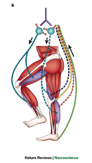
Previously, we discussed how valgus collapse is often related to a number of movement related pathologies. The construct of “valgus collapse” has previously been suggested to come primarily from a combination of hip adduction, hip internal rotation and knee external rotation. Now the question begs as to whether valgus collapse is modifiable and if so why does valgus collapse occur? Is it just a strength issue, is it a muscle activation issue, is it a proprioceptive issue or is it something entirely different?

Multiple studies examining valgus collapse have suggested that it is modifiable. Multiple studies have suggested that neuromuscular training programs can reduce the amount of valgus collapse. Reductions in valgus collapse during jump landing have also been observed when using imagery techniques.  The bottom line here is that valgus collapse is modifiable. Now that we know it is modifiable it is important to determine what are the factors associated with this movement dysfunction in order to develop efficient intervention strategies.
The first item that is often thought of to correct valgus collapse is maximum muscle strength. Research on the relationship between strength and valgus collapse has suggested that no relationship exists between these parameters. While maximum strength alone is not related to valgus collapse, it does appear that a component of strength, muscle endurance, is related to hip internal rotation during running (a component of valgus collapse). Souza et al., (2009) reported that the only factor that predicted hip internal rotation during running, when considering multiple lower extremity strength and anthropometric measures, was hip extension (Gluteus maximus) endurance (r2 = 0.20).  The results of this study help in understanding what factors are related to 1 of the 3 components of “valgus collapse”. So the question remains as to what else may be related to this movement construct.
The next item that is often discussed when attempting to explain valgus collapse is muscle activation. Little work has been conducted in this area likely due to the delicate nature and difficulty in the collection and interpretation of these data. One study has suggested that an earlier onset of the gluteus medius and maximus were correlated with hip adduction motion while an earlier onset of the gluteus maximus was correlated with hip internal rotation motion during running (Willson et al., 2011). It was interesting to note that the timing of onset exhibited a stronger relationship than peak or average muscle activity of the gluteus medius and maximus during running. However, since correlation does not equal causation it is important to look further into the literature. Follow up studies have revealed that the strongest predictors (Willson et al., CSM 2011; r2 = 0.45) of hip adduction during running is the onset and length of activation of gluteus medius. These findings would suggest that neuromuscular training that causes an early onset of the gluteal muscles would be beneficial in optimizing movement retraining as related to correcting valgus collapse.
So to date, the best hypothesis that we have as to how to normalize “valgus collapse” is by focusing on gluteal muscle endurance and pre-activation. It is important to note that both of these studies occurred in during running as opposed to jump landing which may bring about a different model for retraining due to the bilateral nature of the task. I think one question that remains is regarding at what level of resistance does the dysfunctional pattern appear?  Jump landings and running place about 2.5-5 bodyweights on the lower extremity on the body and when our bodies respond with valgus collapse it is not because it is physiologically optimal rather it is due to an inherent need to utilize secondary planes of motion to keep the body upright and to maintain a cranial acceleration of 1 g. If this were a resistance exercise we would simply reduce the amount of weight (i.e. take a plate off or change barbells) to examine under what load the compensatory strategy occurred, however, these are dynamic motions which we cannot offload so easily. This is what we will discuss in our next two postings. How do we breakdown the higher level constructs of running and jump landings to determine at what level dysfunction exists?
             
Valgus pt 2 Pic 2.jpgvalgus pt 2 pic 1.jpgValgus 2 article.png

Thursday, September 6, 2012

What is Valgus Knee Collapse and How Could it Affect Me?

Identifying the what and why of valgus collapse
(Part 1: Identifying the what of valgus collapse)
It seems as if every lower extremity overuse ailment is associated to some
degree with valgus collapse. ACL tears? Check. Patellofemoral Pain? Check.
Illiotibial band pain? Check. Tibial Stress Fractures? Check. As a result a
number of research studies have begun to examine what exactly valgus
collapse is and what factors are associated with valgus. One of the primary
researchers in this area is John Willson, PT, PhD in the Department of Physical
Therapy at the University of Wisconsin at LaCrosse. Research conducted by Dr.
Willson has led us to a better understanding of this pathological movement.
First, it is important to understand what components of movement make up
the valgus collapse construct. Valgus collapse is typically measured by viewing
the frontal plane motion and thus creating a frontal plane projection angle.
however, just because we see the picture shows frontal plane motion does that suggest the motion is
coming from the frontal plane in the body. Even when you place the knee joint in 40 degrees of flexion
(typical of running at midstance) the available frontal plane motion is minimal. As a result we need to
understand what are the primary motions associated with this pattern.
An initial study in this area by Willson and colleagues correlated the twodimensional
frontal plane projection angle to three-dimensional data of the
lower extremity during a single leg squat in 40 runners half of whom had
patellofemoral pain. The researchers observed that the strongest correlates
of the frontal plane projection angle were the frontal plane motion at the hip
and transverse plane motion at the knee (external rotation) and hip (internal
rotation). Not surprisingly, there was not a significant relationship for the
frontal plane angle at the knee. Additional analysis of the significant
relationships revealed that the primary factors associated with the valgus
collapse posture were contralateral pelvic drop, femoral adduction and
femoral internal rotation. While I imagine this result does not surprise
anyone it provides support and directions for areas with which to intervene
when aiming to alter valgus collapse.
As a result of this study we know have a better idea of what is associated with
valgus collapse. Now the follow up question is what needs to change to
reduce valgus collapse? Is it just a strength issue, is it a muscle activity issue,
is it a proprioceptive issue? Well, it all likelihood it depends on the individual
who needs the training and it is important to systematically screen out all of
these issues. That being said through controlled research studies we can
begin to understand what are the primary factors associated with this
pattern. Examining the factors associated with valgus collapse will be
highlighted in the 2nd part of this series before we begin to take a look at
some motion analysis case studies in this area as well.

You can get more information about movement at www.functionalmovement.com 

Here at Better Bodies on Campbell, we have fully implemented the Functional Movement System and our clients couldn't be happier.  To have better range of motion, flexibility, balance to equal better workouts and better results.  Call us today and schedule a free screen. 520-318-3488 or email us at justin@betterbodiestucson.com


Thursday, November 3, 2011

Shopping Tip

Here is a shopping tip to stay healthy. I make it a personal challenge to use the carry basket and not the push cart. If I can't fit it in the basket then I don't need it. Fruit, Veggie, Meat source will all fit in the carry basket. Try it. I work from 830 to 830 and I still make it a habit to go to the store daily so I always eat fresh and exactly what I want.

Let one of our fitness professionals at Better Bodies on Campbell help with your health fitness program, whatever your needs are. Contact us today and lets get started on a better body for you. Ask for Justin.

Office: 520-318-3488
Email: justin@betterbodiestucson.com
Facebook: facebook.com/betterbodiesoncampbell
Website: betterbodiesoncampbell.com
Twitter: twitter.com/betterbodiestuc

Wednesday, December 10, 2008

Pregnancy and Exercise

Always consult with your physician before beginning an exercise program. The basic rule of thumb is that if you are currently exercising as you become pregnant, you can resume exercise at the same level of intensity. It is not reccomended to add or increase exercise once you become pregnant.

Of course there are many things to take into consideration while developing a program during pregnancy. This is why working with a trained professional is such a great benifit. Knowing the do's and don'ts to be able to accomplish the following. In the following are some of the benefits for pregnant women who engage in properly designed prenatal exercise programs (adapted from ACSM 2000):

* Improved cardiovascular and muscular fitness
* Facilitated recovery from labor
* Faster return to prepregnancy weight, strength, and flexibility levels
* Reduced postpartum belly
* Reduced back pain during pregnancy
* More energy reserve
* Fewer obstetric interventions
* Shorter active phase of labor and less pain
* Less weight gain
* Enhanced maternal psychological well-being that may reduce feelings of stress, anxiety, and depression often experienced during pregnancy
* Increased likelihood of adopting permanent healthy lifestyle habits.
* May also be beneficial in the primary prevention of gestational diabetes.

Some research has revealed reduced birth weight in babies whose mothers performed high-intensity exercise throughout their pregnancy. The lower birth weight was approximately 300 to 350 grams (10 to 12 ounces) and apparently resulted from a decreased amount of subcutaneousous fat in the newborn. There are no documented adverse fetal effects related to exercise-induced fetal heart rate changes.

There are more benifits like less back pain, leading to less need for drugs during delivery and shorter labor.

Exercise selection and safety are our first concern. As you can see we take our job and safety very serious and if you have any questions, please feel free to ask.


Health for Life,

Justin List